
A kitchen remodel is one of the most exciting upgrades a homeowner can make. It improves functionality, modernizes the home, and often increases property value at the same time. But once the dust settles and daily life returns to normal, many homeowners start noticing things they wish they had done differently.
Some regrets are small inconveniences that become annoying over time. Others involve expensive design decisions that affect storage, lighting, workflow, or long-term durability. The truth is, even beautiful kitchens can end up feeling impractical if the remodel focuses too heavily on appearance without considering how the space is actually used.
Today’s homeowners are becoming more thoughtful about kitchen remodeling decisions because modern kitchens do more than ever before. They serve as gathering spaces, workstations, entertainment areas, and central hubs for daily routines.
Understanding the most common kitchen remodeling regrets can help homeowners avoid costly mistakes while creating a space that feels functional, timeless, and comfortable for years to come.
Prioritizing Looks Over Functionality
A Beautiful Kitchen Still Needs to Work Well
One of the biggest regrets homeowners mention after a kitchen remodel is focusing too much on aesthetics while overlooking functionality.
A kitchen may look incredible in photos, but if movement feels awkward or storage becomes frustrating, daily use quickly becomes stressful.
Common functional mistakes include:
-
Poor appliance placement
-
Limited counter space
-
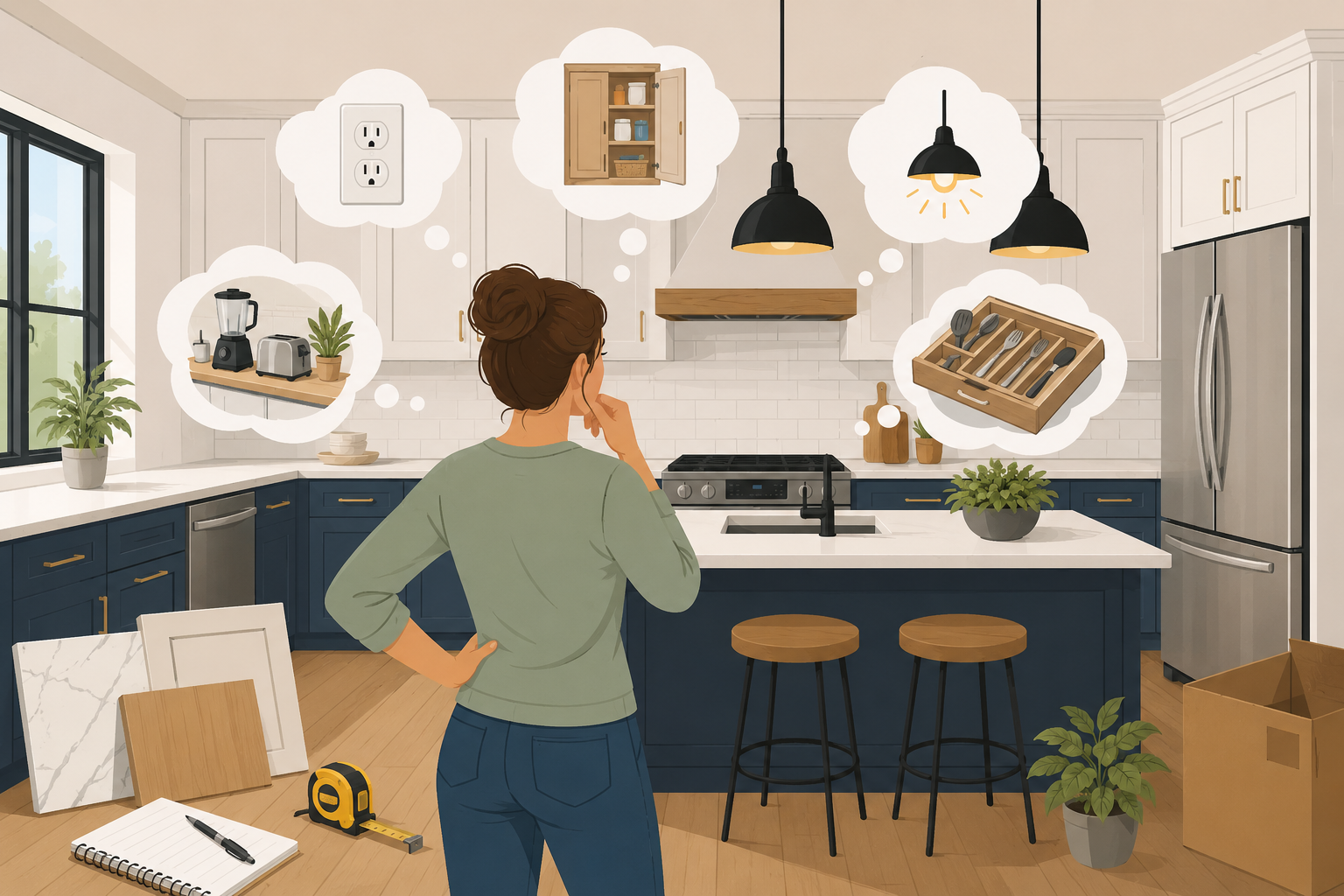
Not enough outlets
-
Tight walkways
-
Insufficient prep areas
-
Difficult cabinet access
The most successful kitchen remodels balance design with practical everyday use.
Workflow Matters More Than Trends
The kitchen work triangle — the relationship between the sink, stove, and refrigerator — still matters. Even modern open-concept kitchens benefit from thoughtful movement flow.
Ignoring functionality often leads homeowners to realize later that the kitchen feels less efficient than the previous layout.
Not Adding Enough Storage
Storage Problems Become Obvious Quickly
Many homeowners underestimate how much storage they actually need.
Once dishes, appliances, cookware, pantry items, and small electronics are moved back into the kitchen, the lack of storage becomes immediately noticeable.
This is especially common in minimalist kitchen designs where open shelving replaces too many upper cabinets.
Hidden Storage Is More Important Than Ever
Modern kitchens now rely heavily on smart storage solutions, including:
-
Deep drawers
-
Pull-out pantry systems
-
Corner cabinet organizers
-
Appliance garages
-
Vertical dividers
-
Island storage compartments
Homeowners redesigning compact spaces often use smart kitchen island storage solutions to improve organization without overcrowding the layout.
Choosing Trendy Designs That Age Too Fast
Trends Change Faster Than Expected
Another major remodeling regret comes from chasing short-term design trends that quickly feel outdated.
Bold cabinet colors, ultra-trendy backsplashes, unusual hardware, or highly specific finishes may feel exciting initially but lose appeal within a few years.
The problem is especially noticeable in kitchens because they are one of the most heavily used spaces in the home.
Timeless Design Usually Wins
The kitchens that age best tend to use:
-
Neutral foundations
-
Natural textures
-
Clean cabinet styles
-
Warm lighting
-
Balanced color palettes
This does not mean kitchens need to feel boring. It simply means trendy details should be easier to update later without requiring another major renovation.
Underestimating Lighting Needs
One Ceiling Light Is Never Enough
Lighting is one of the most overlooked parts of kitchen remodeling.
Many homeowners regret not adding enough layered lighting once they start using the space daily.
A kitchen should include multiple lighting sources for different purposes, including:
-
Task lighting
-
Ambient lighting
-
Accent lighting
-
Under-cabinet lighting
-
Pendant lighting
Without proper lighting, even expensive kitchens can feel dim or uncomfortable.
Shadows Create Everyday Frustrations
Poor lighting placement often creates shadows directly over prep spaces. This becomes frustrating during cooking, cleaning, and entertaining.
Layered lighting helps kitchens feel larger, warmer, and more functional throughout the day.
Installing Cabinets That Don’t Maximize Space
Cabinets Influence Daily Convenience
Cabinets are one of the biggest investments in any kitchen remodel, yet many homeowners later regret choosing styles that prioritize appearance over usability.
Common complaints include:
-
Shelves that are too deep
-
Hard-to-reach corners
-
Insufficient drawer space
-
Limited pantry storage
-
Doors that block movement
Modern cabinetry now focuses heavily on accessibility and organization.
Drawers Often Work Better Than Shelves
Large lower drawers have become increasingly popular because they improve visibility and reduce bending.
Soft-close features, pull-outs, and internal organizers also make kitchens feel more efficient and luxurious without dramatically increasing remodeling costs.
Not Planning Enough Counter Space
Countertops Affect Everyday Functionality
Counter space plays a major role in how comfortable a kitchen feels.
Many homeowners regret sacrificing prep areas for oversized sinks, decorative features, or unnecessary appliances.
Insufficient counter space becomes especially frustrating during:
-
Meal preparation
-
Entertaining guests
-
Baking
-
Hosting holidays
-
Working from home
Clutter Builds Faster Without Workspace
Limited countertop space also makes kitchens appear messier because appliances and accessories have nowhere else to go.
Homeowners trying to maintain cleaner kitchen layouts after realizing how quickly surfaces become overcrowded.
Choosing the Wrong Countertop Materials
Looks Are Not the Only Factor
Countertops need to handle heat, moisture, spills, and constant daily use.
One common regret is selecting materials based only on appearance without considering durability or maintenance.
Some surfaces stain easily, scratch quickly, or require more upkeep than homeowners expected.
Lifestyle Should Influence Material Choices
Busy households often prefer durable and low-maintenance materials like quartz because they resist stains and require less sealing.
Natural stone remains popular, but maintenance expectations should always be understood before installation.
Homeowners comparing materials frequently explore durable countertop before finalizing remodeling decisions.
Going Too Minimalist
Minimalism Can Reduce Practicality
Modern kitchen trends often emphasize clean lines and minimal visual clutter. While this can look beautiful, some homeowners later regret removing too much functionality in the pursuit of simplicity.
Examples include:
-
Eliminating upper cabinets
-
Using too little storage
-
Installing tiny islands
-
Hiding frequently used appliances
-
Choosing form over convenience
Real Life Requires Flexibility
A kitchen should support everyday routines, not just visual aesthetics.
The best minimalist kitchens still include thoughtful storage, comfortable prep areas, and practical accessibility.
Ignoring Ventilation
Cooking Creates Heat and Moisture
Ventilation is one of the least glamorous parts of a kitchen remodel, but it heavily affects comfort.
Weak ventilation allows:
-
Odors to linger
-
Grease buildup
-
Excess moisture
-
Poor air quality
This becomes especially noticeable in open-concept homes where cooking smells spread into living spaces.
Proper Ventilation Protects the Kitchen
A high-quality range hood improves both comfort and long-term maintenance.
Good airflow also helps preserve cabinets, paint finishes, and nearby furniture over time.
Choosing Appliances Without Measuring Properly
Appliance Planning Matters Early
Many homeowners regret appliance choices because measurements were not carefully planned before cabinetry and layouts were finalized.
Common issues include:
-
Refrigerator doors hitting walls
-
Dishwashers blocking walkways
-
Microwaves placed too high
-
Oversized ranges crowding prep areas
Appliances Should Match the Layout
A kitchen should feel balanced. Oversized appliances can dominate smaller kitchens, while undersized appliances may look awkward in large open spaces.
Careful planning prevents costly modifications later.
Forgetting About Electrical Needs
Modern Kitchens Need More Power
Today’s kitchens rely on more devices and appliances than ever before.
One regret homeowners frequently mention is not installing enough outlets or charging areas during remodeling.
Modern kitchens often include:
-
Coffee stations
-
Air fryers
-
Charging docks
-
Smart appliances
-
Workstations
-
Under-cabinet lighting systems
Electrical Planning Improves Convenience
Adding outlets during remodeling is much easier and cheaper than retrofitting them later.
Hidden charging stations and island outlets are especially popular in newer kitchen designs.
Spending Too Much in the Wrong Areas
Budget Imbalances Create Frustration
Some homeowners overspend on visual upgrades while cutting costs on features they use every day.
Examples include:
-
Expensive decorative tile
-
Luxury hardware
-
Trend-driven fixtures
Meanwhile, they may compromise on:
-
Storage quality
-
Lighting
-
Ventilation
-
Cabinet durability
Smart Investments Deliver Better Results
The best remodeling budgets focus first on function, durability, and workflow before decorative upgrades.
Beautiful details matter, but comfort and convenience usually have a greater long-term impact.
Rushing the Remodeling Process
Fast Decisions Often Lead to Regrets
Kitchen remodeling involves hundreds of small decisions.
Homeowners who rush material selections, layout approvals, or contractor communication often end up noticing preventable issues later.
Patience during planning usually leads to better long-term satisfaction.
Thoughtful Planning Saves Money
Spending extra time reviewing layouts, materials, and storage needs can prevent expensive post-remodel adjustments.
Careful planning also helps homeowners feel more confident throughout the renovation process.
Get a Free Kitchen Remodeling Quote
Planning a kitchen remodel? Avoiding common remodeling regrets starts with thoughtful design, smart storage planning, and a layout that supports how you actually use your space every day.
Final Thoughts
A kitchen remodel should improve both the appearance and functionality of a home. While beautiful finishes and modern trends matter, the most successful kitchens are the ones that feel comfortable and practical long after the renovation is complete.
Most homeowner regrets come down to planning decisions that seemed minor during construction but became frustrating during daily use. Storage limitations, poor lighting, weak layouts, and trend-heavy designs are among the most common issues people wish they had approached differently.
The good news is that these mistakes are highly avoidable with proper planning and realistic expectations.
By focusing on workflow, storage, lighting, durability, and long-term comfort, homeowners can create kitchens that not only look impressive but also support everyday life more effectively.
FAQ
What is the most common kitchen remodeling regret?
Lack of storage is one of the most common regrets homeowners mention after completing a kitchen remodel.
How can I avoid kitchen remodeling mistakes?
Careful planning, functional layouts, realistic storage needs, and durable material choices help reduce long-term remodeling regrets.
Are trendy kitchen designs a bad idea?
Not necessarily, but overly trend-driven choices can feel outdated quickly. It is usually better to combine timeless foundations with smaller trend accents.
Why is kitchen lighting so important?
Proper lighting improves visibility, comfort, safety, and the overall atmosphere of the kitchen.
What countertop material is easiest to maintain?
Quartz is often considered one of the easiest countertop materials to maintain because it resists stains and does not require sealing.
How much storage should a kitchen have?
A kitchen should include enough storage for cookware, pantry items, appliances, utensils, and future needs without overcrowding countertops.